
In traditional urban planning, the mosque was the primary nucleus, around which life took shape. It was not merely a separate building, but a center where paths and hearts converged, and around which the movement of the market, neighborhood, and homes was organized. From it, the day began, and to it, tranquility returned.

Discover the Mosque's Story

Abdul Rahman Al-Qusaibi Mosque: The Heart of the City and a Gathering Place for Souls

The construction of the mosque was not merely about erecting walls; it was the embodiment of the founder's vision, who wanted the place to be 'tranquility, not adornment.' The founder believed that the mosque was a testament to the community's spirit, a mirror reflecting the simplicity of life and the nobility of its intentions, where the distinction between rich and poor, traveler and resident, dissolves before the meaning of a single prostration.

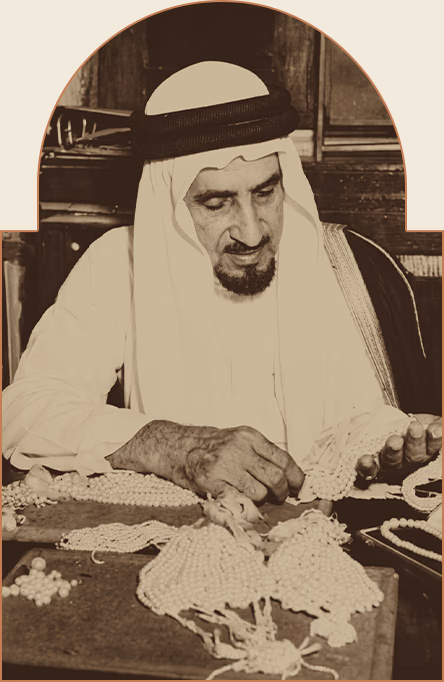
The Founder

Sheikh Abdul Rahman bin Hassan Al-Qusaibi

رجل عربي يرتدي الثوب والغترة يعمل على ترتيب خرز أو حبات بيضاء على الطاولة.
Tranquility, not adornment... An endowment for God and a service to passersby.
The construction of the mosque was not merely about erecting walls; it was the embodiment of the founder's vision, who wanted the place to be 'tranquility, not adornment.' The founder believed that the mosque was a testament to the community's spirit, a mirror reflecting the simplicity of life and the nobility of its intentions, where the distinction between rich and poor, traveler and resident, dissolves before the meaning of a single prostration.
Construction Timeline and Renovation Phases
History of the Mosque
1370 AH
Phase One
It embodied the spirit of a bygone era: walls made of local materials, simple decorations, and modest spaces harmonizing with the oasis environment and its climate. At that time, the mosque was a natural extension of traditional Al-Ahsa architecture, reflecting the simplicity of life and its closeness to the land.
مشهد تاريخي لعرب يقفون مع دراجة وجمل راكبه في قرية تقليدية تحت قوس.
The 1980s
Phase Two
This phase emerged with the transformations of the modern century, introducing new materials and different construction techniques, along with functional improvements necessitated by the growing needs of the people. It adopted an architectural language closer to modern style, reflecting an era where standards of comfort and utility had changed.
مئذنتان طويلتان من المبنى الأبيض في شارع حضري تحت سماء صافية زرقاء.
1447 AH
The Third Phase
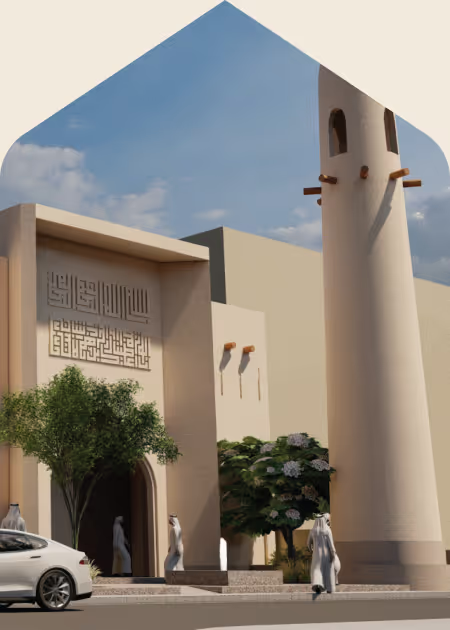
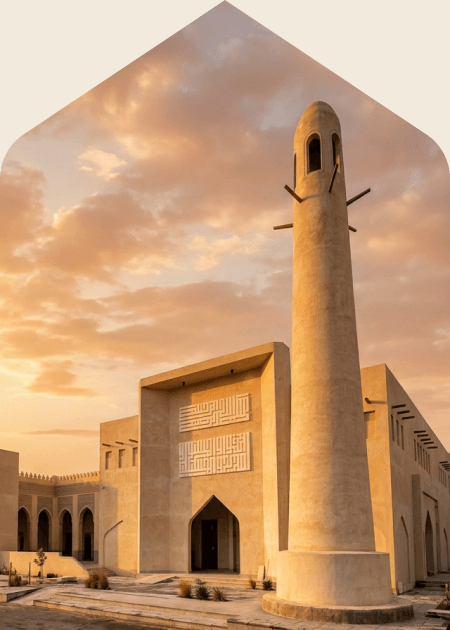
This was the contemporary restoration, a conscious attempt to restore the essence of the place without literally replicating the past. The modern works aimed to reposition the mosque within its original architectural and cultural context, with a meticulous approach that respects its history and suits the demands of the present.
واجهة مبنى بتصميم معماري تقليدي مع مئذنة وأسود، وأشجار صغيرة، وأشخاص يرتدون الثوب السعودي، وسيارة بيضاء متوقفة.
Timeline of Construction and Restoration Phases
History of the Mosque
1370 AH
Phase One
It embodied the spirit of ancient times; featuring walls made of local materials, simple decorations, and modest spaces harmonizing with the oasis environment and climate. At that time, the mosque was a natural extension of traditional Al-Ahsa architecture, reflecting the simplicity of life and its closeness to the land.
مشهد تاريخي لعرب يقفون مع دراجة وجمل راكبه في قرية تقليدية تحت قوس.
The 1980s
Phase Two
This phase coincided with the transformations of the modern century, introducing new materials, different construction techniques, and functional improvements necessitated by growing public needs. This period adopted an architectural language closer to modern styles, reflecting an era where standards of comfort and utility had evolved.
مئذنتان طويلتان من المبنى الأبيض في شارع حضري تحت سماء صافية زرقاء.
1447 AH
Phase Three
The contemporary restoration was a conscious effort to revive the essence of the place without literally reverting to its past. Modern interventions aimed to reposition the mosque within its original architectural and cultural context, employing a meticulous approach that respects its history while accommodating contemporary needs.
واجهة مبنى بتصميم معماري تقليدي مع مئذنة وأسود، وأشجار صغيرة، وأشخاص يرتدون الثوب السعودي، وسيارة بيضاء متوقفة.
Construction and Restoration Timeline
1447 AH
The Third Phase
This was the contemporary restoration, a conscious attempt to restore the essence of the place without literally replicating the past. The modern works aimed to reposition the mosque within its original architectural and cultural context, with a meticulous approach that respects its history and suits the demands of the present.
واجهة مبنى بتصميم معماري تقليدي مع مئذنة وأسود، وأشجار صغيرة، وأشخاص يرتدون الثوب السعودي، وسيارة بيضاء متوقفة.
The 1980s
The Second Phase
This phase emerged with the transformations of the modern century, introducing new materials and different construction techniques, along with functional improvements necessitated by the growing needs of the people. It adopted an architectural language closer to modern style, reflecting an era where standards of comfort and utility had changed.
مئذنتان طويلتان من المبنى الأبيض في شارع حضري تحت سماء صافية زرقاء.
1338 AH
The First Phase
It carried the spirit of ancient times: walls made of local materials, simple decorations, and modest spaces in harmony with the oasis environment and climate. At that time, the mosque was a natural extension of traditional Al-Ahsa architecture, reflecting the simplicity of life and its closeness to the land.
مشهد تاريخي لعرب يقفون مع دراجة وجمل راكبه في قرية تقليدية تحت قوس.
A Vibrant Space
Where Functions Converge
The mosque transcends being merely a place of prayer to become an integrated social system. From minarets that set the rhythm of the neighborhood, to rooms that welcomed travelers, and even to the study circles in the neighboring Al-Najah School, which was visited by King Abdulaziz.
Explore the Mosque