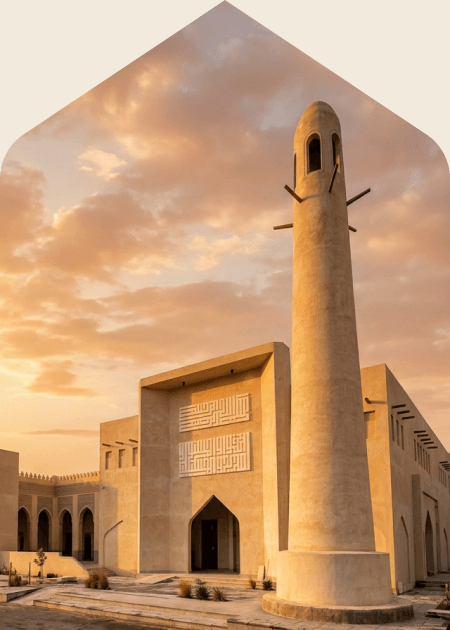

Al Gosaibi Mosque
In the authentic urban fabric of Al-Ahsa, the mosque forms the core from which life emerges. It acts as the center that orchestrates the rhythm of the market and brings homes together in harmony. From its doors, the day begins with its blessings, and to its sanctuary, tranquility returns at dusk. It seamlessly unites the reverence of worship with a noble social impact, giving the place its profound identity and meaning. This architecture stands as a continuation of the noble Prophetic tradition since the foundation of the first mosque in Medina. It endures as a pillar of stability, a haven for knowledge and solidarity, and a moral canopy that preserves the community's cohesion and heritage.

Algosaibi Mosque
Inthe authentic urban fabric of Al-Ahsa, the mosque forms the core from whichlife emerges. It acts as the center that orchestrates the rhythm of the marketand brings homes together in harmony. From its doors, the day begins with itsblessings, and to its sanctuary, tranquility returns at dusk. It seamlesslyunites the reverence of worship with a noble social impact, giving the placeits profound identity and meaning.
Thisarchitecture stands as a continuation of the noble Prophetic tradition sincethe foundation of the first mosque in Medina. It endures as a pillar ofstability, a haven for knowledge and solidarity, and a moral canopy thatpreserves the community's cohesion and heritage.


Founder
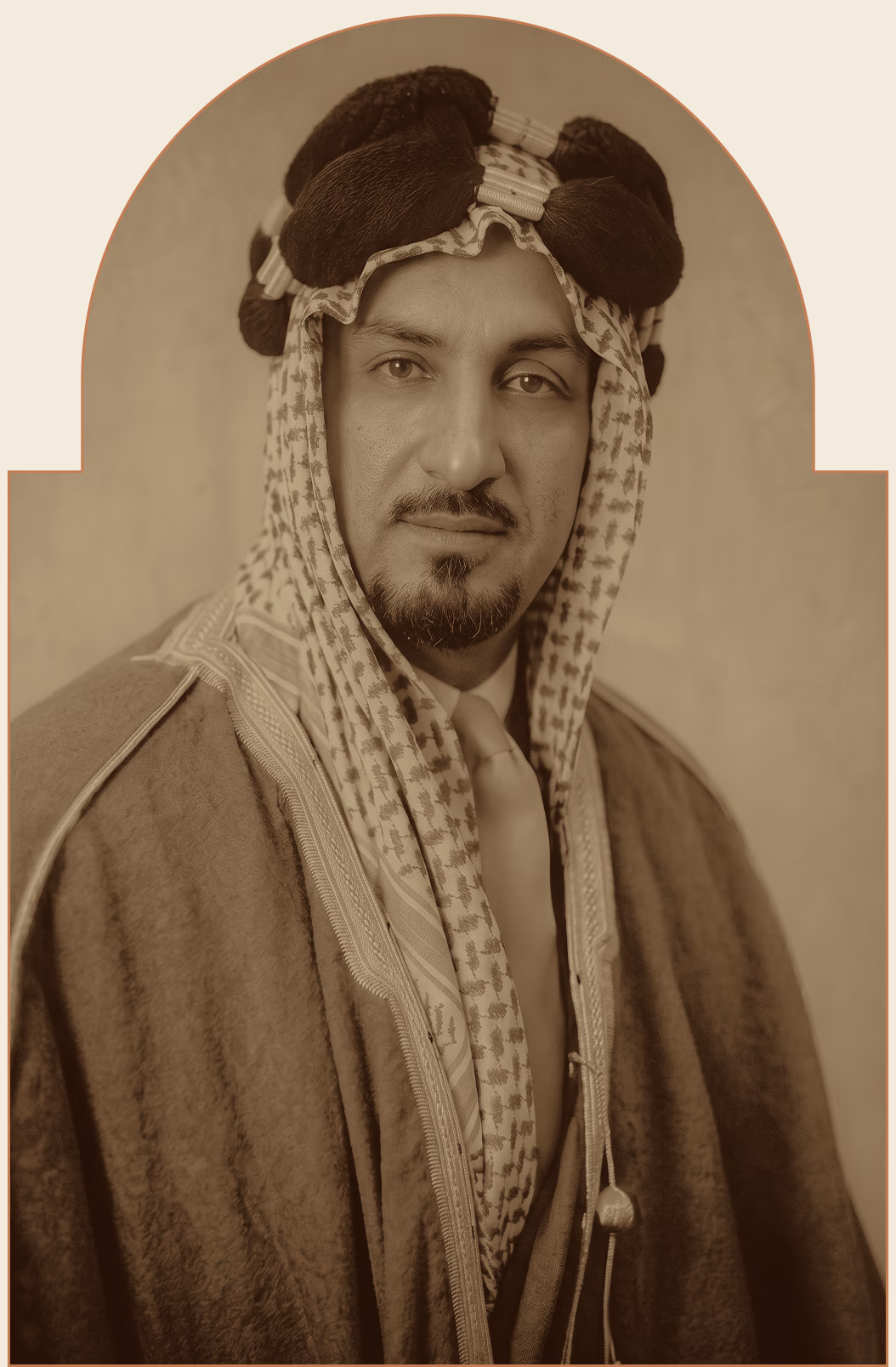
Sheikh Abdulrahman bin Hassan bin Abdullah Al Gosaibi
1300 - 1397 AH
1883 - 1977 AD
Abdulrahman bin Hassan bin Abdullah Al Gosaibi was one of the most prominent businessmen and pearl merchants in the Arabian Gulf during the first half of the 20th century, and a leading figure in both Al-Ahsa and Bahrain. He was a close confidant of King Abdulaziz Al Saud, represented the Kingdom in various political missions, and was later granted the title of Minister of State.
He was known for his high social standing, philanthropic efforts, and commitment to community service, and was a leading figure among the Najdi community in Bahrain. Born in the Al-Na'athal district of Hofuf, he received his education in Bahrain before turning to trade. He learned English and gained a working knowledge of French, mastering the pearl trade through his travels to India before joining his uncles and brothers in managing the family business.
The family’s roots trace back to the town of Al-Qasab in the Najd region. It is said that one of his ancestors, Abdullah, was tasked by the Emir of Huraymila with collecting Zakat in the area, earning him the nickname "Al Gosaibi" which later became the family name.
Abdulrahman bin Hassan Al Gosaibi shared a close relationship with King Abdulaziz Al Saud from the early years of the modern Saudi state. The Al Gosaibi family was among the first merchant families to support King Abdulaziz before the discovery of oil, providing him with supplies and necessities while managing his commercial and logistical affairs through their offices in Bahrain and Bombay. As the state consolidated, King Abdulaziz appointed him as his representative and agent in Bahrain, entrusting him with various political and diplomatic missions. The King relied on his commercial expertise, his fluency in English and French, and the widespread trust he commanded in Gulf and British circles. He was also appointed to several official committees, including the oversight of the commercial enterprise in Paris, and accompanied the King to key meetings in recognition of his competence and loyalty, remaining a trusted confidant until the end of the King's reign.
He funded these efforts at his own expense and was a key contributor to the establishment and financing of Al-Hidaya Al-Khalifia School, the first formal school in Bahrain, which opened in 1338 AH (1919 AD). In the final decades of his life, he served as the patriarch of the Al Gosaibi family, maintaining a prominent status within Bahraini and Gulf society until his passing in 1397 AH (1977 AD) at the age of 94. He was laid to rest in the Manama cemetery.
He was gifted with eight sons from several wives: Khalifa, Fahd, Mustafa, Ibrahim, Khalid, Adel, Nabil, and the renowned minister and poet Ghazi Al Gosaibi.
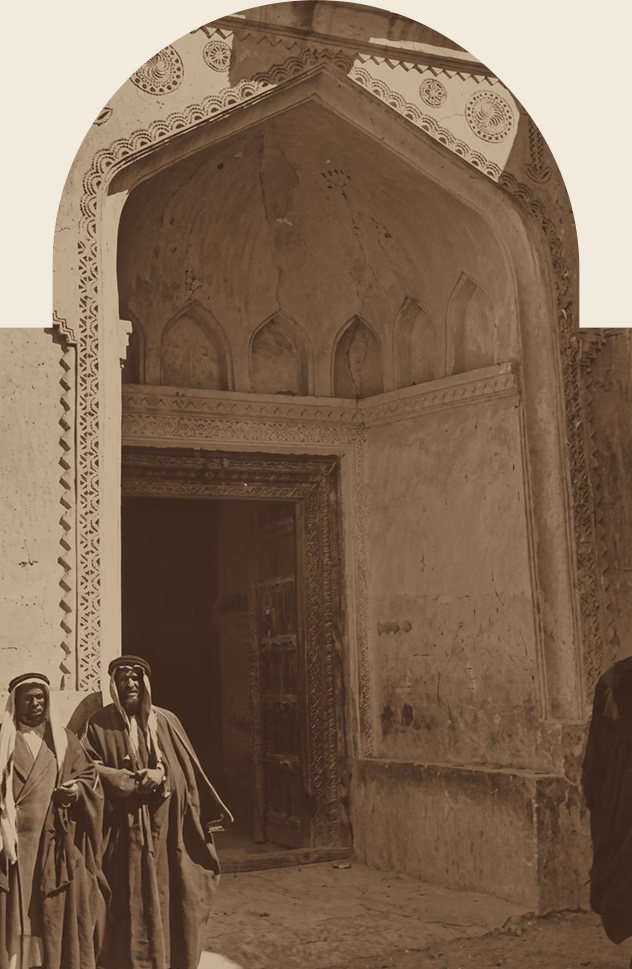
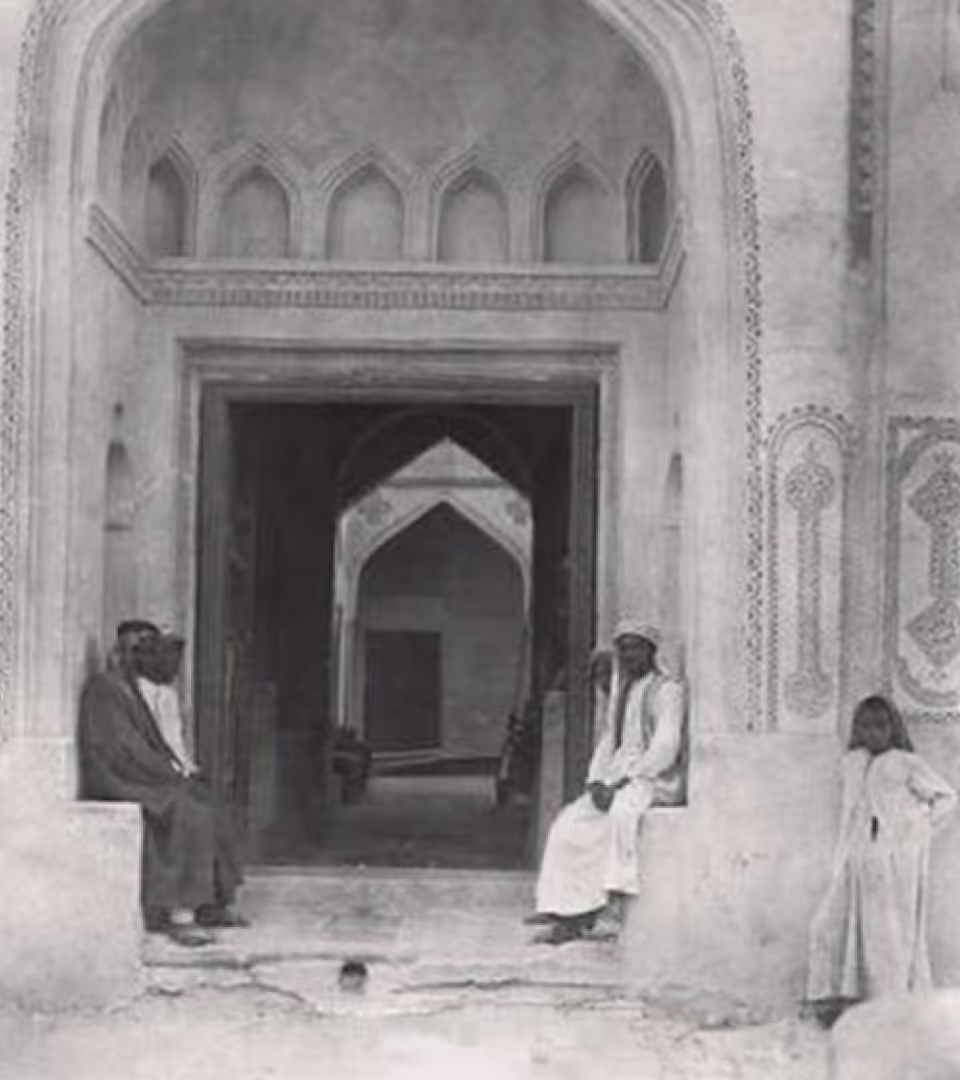
Our mosques stand as living testaments to the spirit of community, reflecting the simplicity of life and the nobility of its purpose. Within their halls, distinctions fade and rows unite in shared prostration, anchoring the concept of righteous development. It was with this profound vision that the Al Gosaibi Mosque was established in Al-Hofuf in 1338 AH (1920 AD) by Sheikh Abdulrahman bin Hassan Al Gosaibi, serving as a dedicated endowment for worship and a sanctuary for both travelers and local residents. This mosque was built to be a home overflowing with tranquility, an integral part of the city’s breathing fabric, standing as a lasting tribute to its founder and an embodiment of the firm belief that the architecture of a place draws its immortality from the cultivation of the human spirit.
Trade in Al-Na'athil
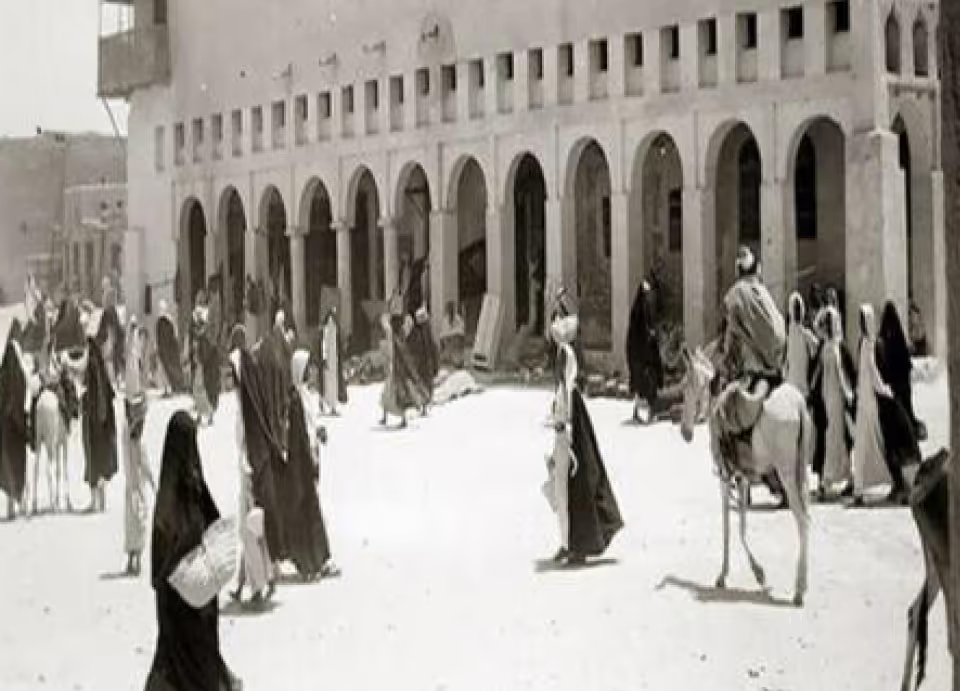
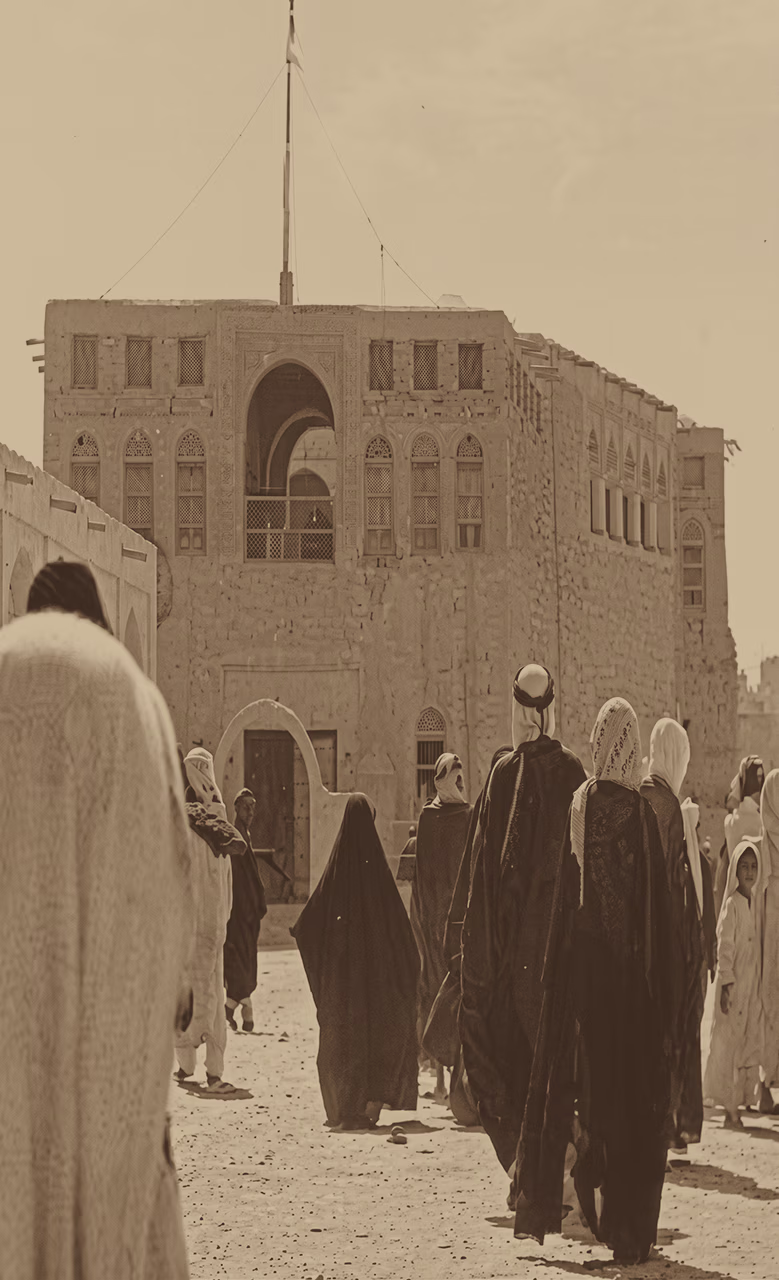
The Al-Na'athil neighborhood served as the administrative and commercial face of Al-Hofuf a welcoming gateway embracing arrivals before they ventured deep into its bustling markets and alleys. Within this oasis, the Al Gosaibi Mosque emerged as a central axis around which community movement and interaction are structured, forming an integral part of a dynamic, integrated ecosystem.
In the memory of Al-Ahsa, the mosque embodies the beating heart of a cohesive urban network, nurtured by deep social bonds and guided by the profound traditions of the place. Understanding this unique harmony reveals the mosque's true significance: a natural extension of the neighborhood's spirit and a daily witness to the life of its community.
Al-Juran Gate
From the east, camel caravans arrived in succession from Al-Uqair port, laden with goods and news, traversing the desert until reaching "Al-Juran Gate”, the most prominent entrance to Al-Hofuf through which the city opened its doors to visitors. There, a vibrant economic scene unfolded, defined by aligned shops and the aromas of commodities originating from distant seas and neighboring markets.
The Al-Na'athil neighborhood stood at the forefront of absorbing this influx, hosting warehouses, inns, and merchants' councils, serving as the bustling eastern gateway of the city and an economic and social sphere where purposes and people converged.
Every caravan passing through that gate wove a new thread into the rich fabric of Al-Hofuf, cementing its status as a living bridge between the coast and the oasis. Within this active commercial context, the Al Gosaibi Mosque acquired a profound spiritual and humanitarian dimension; it offered a sanctuary of rest for travelers and a refuge for passersby to catch their breath before resuming their journey. In this manner, architecture intertwined with livelihoods, and the mosque’s purpose blended seamlessly with daily life, transforming the entire neighborhood into a living rhythm felt within every detail of the place.
Souq Al-Hatab
From Al-Juran Gate, the road stretches towards the Wood Market (Souq Al-Hatab), where simple goods reside alongside the daily stories of the people. There, traditional crafts found their home; carpenters, blacksmiths, date vendors, and basket weavers practiced their trades under an inherited customary system that reflects the community's authenticity.
From this market, alleys branch out towards "Al-Qaisariyah" the historic Al-Ahsa market that serves as the heart of commerce and the main stage for social life. This market formed a vibrant public sphere where people's affairs intersected and their joys and gatherings converged. Around it, small cafes emerged, and neighborhood bonds strengthened, weaving the finest details of collective memory. Between the Wood Market and Al-Qaisariyah, the Al-Na'athil neighborhood stood out as a vital link, bridging commercial activity with urban development, and seamlessly integrating daily life into a broader rhythm.
Amidst this dynamic expanse, the Al Gosaibi Mosque stands as a tranquil witness to the community's movement. It welcomes their footsteps at dawn, accompanies their endeavors through the bustle of the day, and unites them once again at dusk in aligned rows. Thus, the picture is complete: a neighborhood pulsing with commerce, markets reflecting the spirit of heritage, and a mosque firmly rooted in the heart, preserving the place's serenity and immortalizing its meaning throughout the years.
The Architectural Timeline
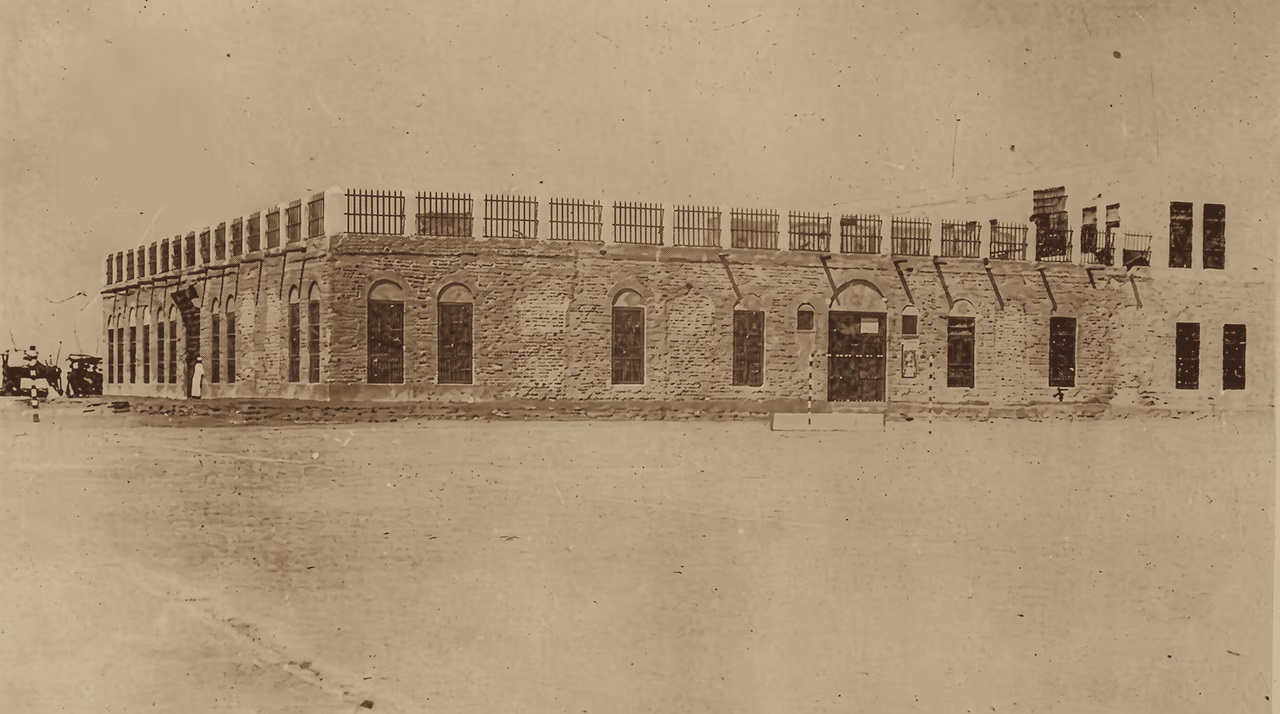
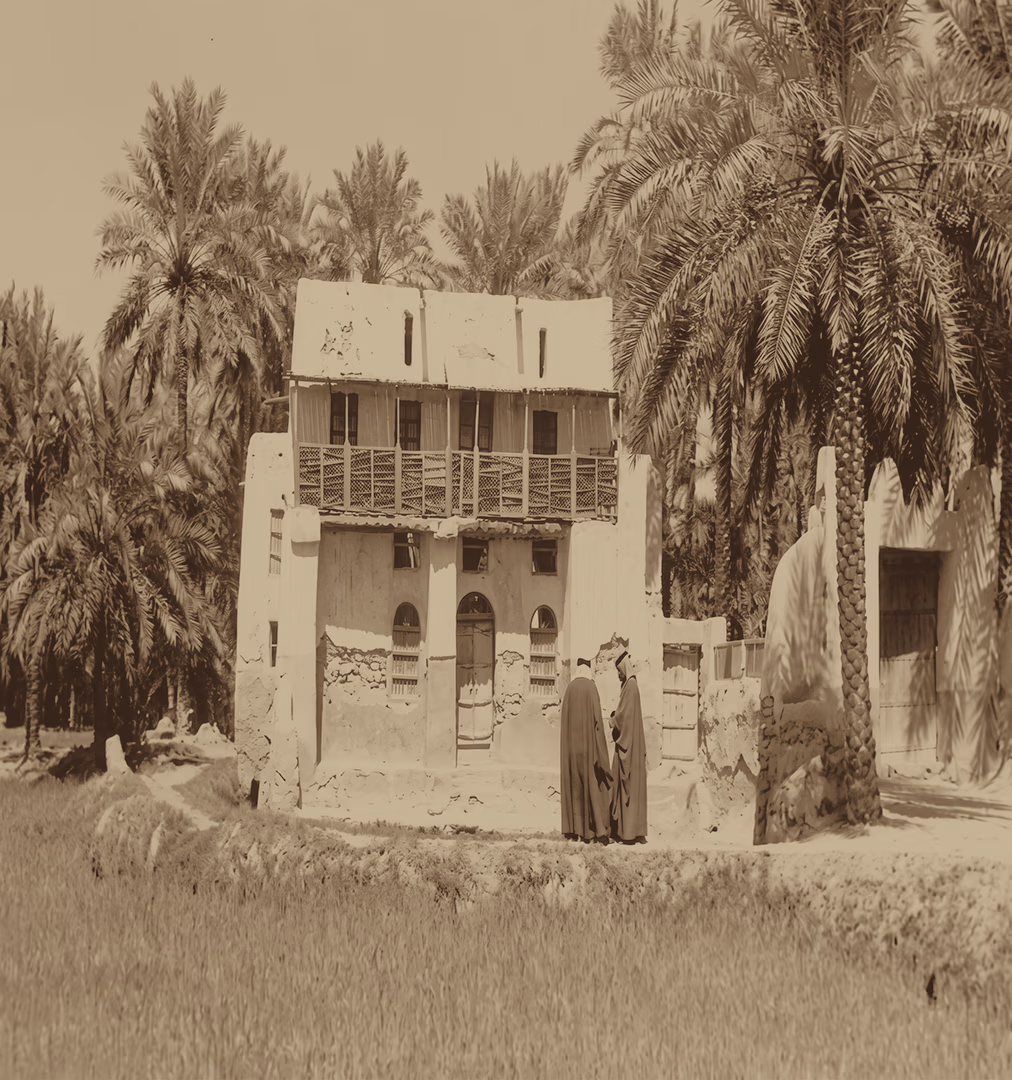
Here, the narrative connects with time and its transformations, where the mosque reveals itself as an open ledger documenting the eras and conditions of the place. The Al Gosaibi Mosque progressed through three successive restoration phases, each serving as a mirror reflecting a distinct stage of historic Al-Ahsa architecture. Thus, the structure itself narrates the city's story—its journey from the simplicity of traditional craftsmanship, through modern techniques, ultimately arriving at a contemporary balance that seamlessly integrates heritage with identity.
These historical phases stand as living testaments to the evolution of architectural taste, the changing needs of the community, and the diversification of building methods across decades, rendering the mosque's restoration a continuous journey of preserving memory and identity.